


Harvey Mudd College, UCS Land Use · 2025–2026 · Built with Godot 4.5
What is Common Ground?
Common Ground is an educational multiplayer strategy video game about multibenefit land repurposing.
Common Ground takes place in Townsville, a small community in California’s Central Valley. Players take on four community roles: Community Leader, Environmentalist, Green Economist, or Local Farmer. Unsustainable agricultural practices on land surrounding your community have led to poor air quality and water insecurity. Together, players explore multibenefit cropland repurposing as a solution to help Townsville thrive. The game runs for 4 rounds and lasts about 30-45 minutes.
Each round, players browse the project options, propose a project and placement on the board, and discuss the range of project proposals. Following a vote, the winning project is built. At the end of each round, Townsville experiences a random weather event: a drought, a flood, or a heatwave. How the town reacts depends on the types of land use changes and cropland repurposing projects you have already implemented. After the extreme weather event, the game will also compute the side effects associated with the current land uses, which will have a real cost for the community. Like in real life, this cost seems invisible at times but it’s very real, so be aware of it if you want to win the game.
Four metrics shift throughout the game: community well-being, environment, economy, and land value. Each player has an individual goal: get their metric to 100. But there's a shared goal as well. If any of the four metrics is below 50 when the game ends, everybody loses.
A few things to note
- Every choice has a cost. Each project's cost will be deducted from the community fund. The location of a project will affect how well it performs – and can remove ongoing effects from existing land uses. Some projects provide protection from the end of round weather events. Finally, only one project will be built each round.
- Each role has one ability. Each role includes a unique ability: an extra vote (community leader), a doubled environment score (environmentalist), a reduced project cost (economist), or improved land value (farmer). Each ability can be used once per game. Use it strategically.
- Prepare for climate events. Each round ends with a random event: a drought, a flood, or a heatwave. The projects built during the game will determine how prepared Townsville is to face these events each round.
- Account for the “invisible” side effects Each land use has side effects that are often excluded from economic models but are very real for nearby communities. At the end of each round, those side effects will be accounted for in the metrics. Look for the invisible side effects so you can minimize the negative ones and promote the positive ones.
Weather Events & Protective Projects
Event
Protective Projects
Drought
Non-irrigated rangeland and Wetland Restoration.

Flood
Floodplain Restoration and Stormwater Basin.

Heatwave
Solar Panels and Green Areas.
| Event | Protective Projects | |
|---|---|---|
|
Drought | Non-irrigated rangeland and Wetland Restoration. | |
Flood | Floodplain Restoration and Stormwater Basin. | |
Heatwave | Solar Panels and Green Areas. |
Meet the Roles
Each player will be assigned one of these four roles. Each role has its own individual goal and a unique ability that you can use once during the game.
| Role | Goal | Ability | |
|---|---|---|---|
 |
Community Leader | Get community well-being to 100. | Once per game, your vote counts as two. |
 |
Environmentalist | Get environment to 100. | Once per game, you can double a project's environmental score. |
 |
Green Economist | Get economy to 100. | Once per game, you can cut the cost of a project in half. |
 |
Local Farmer | Get your land value to 100. | Once per game, increase land value on land that isn't yours. (As a land owner, you may also veto any proposal on your land). |
Farm Co. (not playable)

Farm Co. is a corporate-owned agriculture operation near Townsville. Players will need to negotiate with Farm Co. to build a multibenefit cropland repurposing project on its land. Roll the dice to negotiate with Farm Co. and see whether the winning project can be built.
How to Play
Every round has four steps.
- Proposal — Each player proposes a multibenefit cropland repurposing project.
- Discussion — All players discuss the proposed projects for two minutes.
- Voting — Each player votes for the project they want to build.
- Outcomes — The project with the most votes is chosen. Players negotiate with Farm Co., build the project, and face a random weather event.
1. Proposal — Each player picks a project card and places it on a plot of land to propose a project. Each player may propose a project, or pass. While multiple projects will be proposed, only one project will be built at the end of each round.
2. Discussion — Players have two minutes to try to reach an agreement. Tap any of the proposals to see how it will affect the metrics – community well-being, environment, economy, and land value. You can move proposals to other locations around Townsville if they work better elsewhere. Defend your idea and work out trades.
3. Voting — Each player votes for one of the proposals. Players may also use their abilities at this time. The project with the most votes will be built. Remember, landowners must consent to any project built on their land. The local farmer must agree to any project proposed on their land. Players will negotiate to construct projects on Farm Co.’s land by rolling 2 dice and adding the number of votes for the winning project. A combined score of 7 or higher will be a success, and you will gain Farm Co.’s consent to build the project. If you don’t have the consent, you won’t be able to build a project that round.
4. Outcomes — After the winning project gets built, a random weather event occurs: a drought, a flood, or a heatwave. The projects already on the board can offer protection and reduce the negative effects of the events. After the extreme weather event, the game will compute the side effects of the current land use. At the end of each round, a summary screen shows how the metrics – community well-being, environment, economy, land value - changed due to the winning project, the weather, and the side effects of current land uses. When players are ready, they can start the next round.
Win Condition — All four metrics – community well-being, environment, economy, and land value - need to be at 50 or higher when the game ends, otherwise all players lose. If any player gets their individual metric to 100, they win!
Tutorial Video
This tutorial video walks you through the first round of a game to give you a better understanding of how to set it up and what it might look like.
The game also has a built-in tutorial during the first round and How to Play section throughout the game. It covers the objective, setup, every phase of a round, and a page-by-page walkthrough of the screens.
Printables
Want to play around a real table, or use the game in a classroom or workshop? Use these printouts so each player can see their role information and look at the projects whenever. These printouts contain the cards seen in the game for the player roles, initial land, and multibenefit land repurposing projects.
What is Multibenefit Cropland Repurposing, and Why a Game?
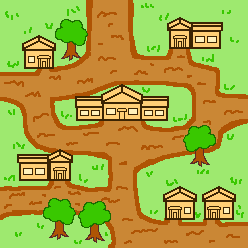
Multibenefit Cropland Repurposing is the transition of irrigated conventional agriculture to uses that promote positive side effects across multiple axes: community well-being, the environment, the economy, and land value, and can also strengthen a community's resilience against severe climates. A transition to agroecology, regenerative, or other sustainable forms of agriculture can be considered cropland repurposing.
Why a game
- Communicating complex topics. Games can be powerful science and policy educational tools, making complex topics understandable in a digestible manner.
- Reaching a wide audience. We envision this game as a tool that can reach broad audiences and be particularly beneficial to decisionmakers, local leadership, advocates, and practitioners who closely work on agricultural land repurposing.
- Having fun. Players can develop an understanding of multibenefit land repurposing while having fun, playing with friends and getting into their characters.
The game is part of the Union of Concerned Scientists project Guiding California's Land Transitions Toward Justice and Equity (2025–2026).